
Our Unique Process Provides Unique Benefits
Aloe polysaccharides have long been associated with the established health benefits of aloe – such as supporting a healthy immune system and reducing the recovery time of skin injuries. Our aloe products are produced by a unique processing method resulting in a Modified Aloe Polysaccharide (MAP). The MAP process enhances our products through bioactivity-guided manufacturing which increases the active molecular weight fraction by 300%.
Aloecorp products have always been science-based. Beginning in the 1990s, we first looked at the aloe polysaccharide, already thought to be the principal active ingredient of Aloe vera. The result of this research identified a fraction of the polysaccharide that was responsible for immune function and cellular health. Following this discovery, two scientific papers were published on the modification of the aloe polysaccharide that increases the highly active fraction of the polysaccharide, Acemannan, by 300%. This scientific breakthrough has resulted in dramatically increased biological benefits when using MAP aloe and made Aloecorp’s ingredient the most widely used aloe in scientific research and the most effective aloe ingredient in the world.
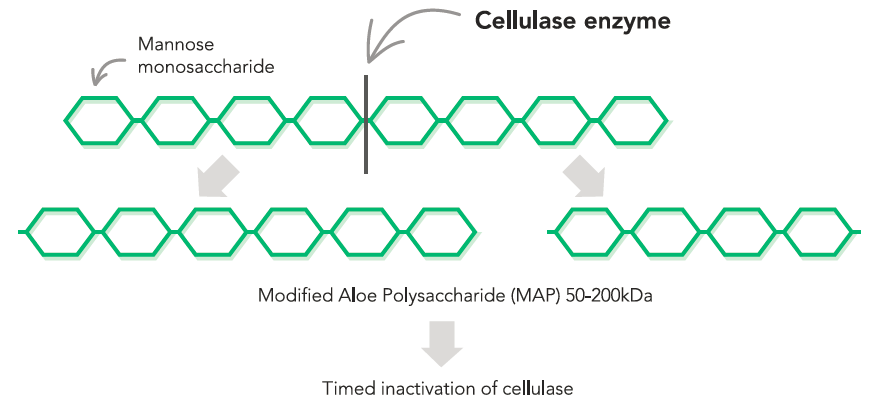
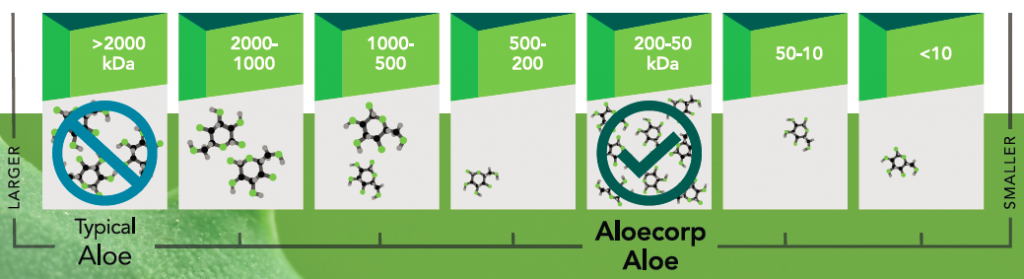
The principle bioactive component of aloe vera, Acemannan, consists of a size range of which the MAP fraction is most responsible for skin function. MAP aloe is produced by a unique method that increases the size range of MAP aloe responsible for skin function.

Qmatrix® exclusive dehydration technology is a patented technology that has been shown in published academic studies to significantly improve the retention of heat‐labile nutrients. This low temperature-short time (LTST) drying method quickly and gently stabilizes Aloe vera with the optimal balance of heat and time.
Academic studies also show that the flavor and color of the product are improved due to low oxidation and that it has improved physical characteristics such as solubility and flowability. Qmatrix® dehydration is a green technology; energy‐efficient and environmentally friendly…perfect for Aloe vera.